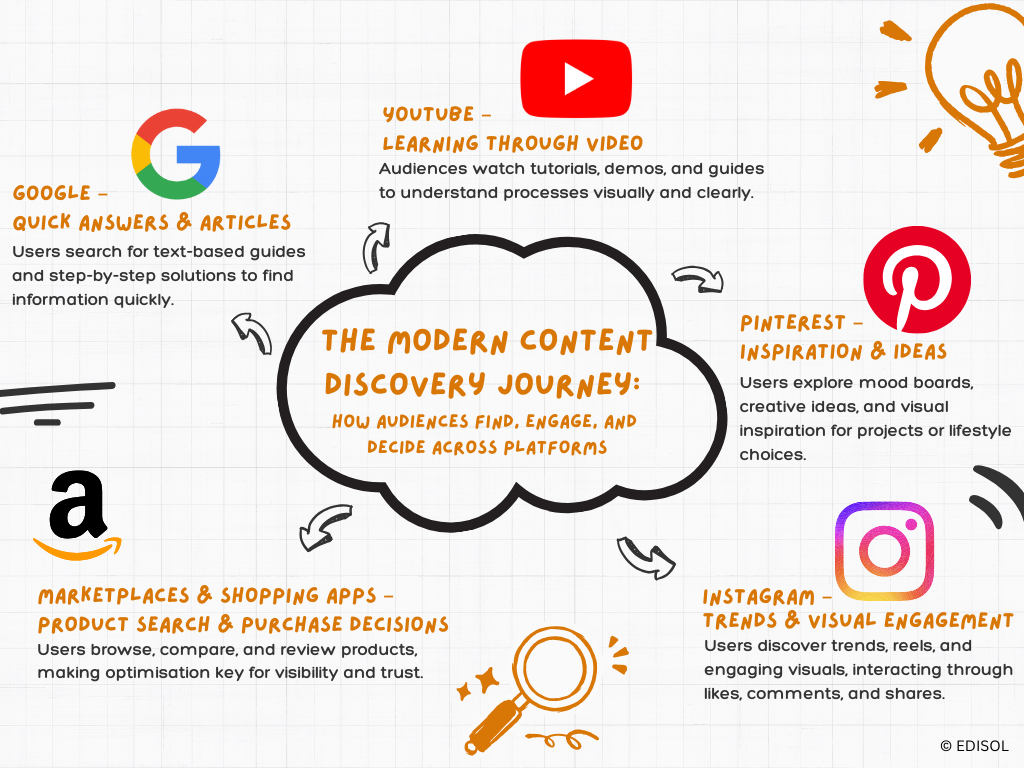
Divya began searching for the ideal recipe to make sourdough bread by going on Google first. When she typed her request into the search bar, she was hoping for an immediate answer. Instead, she saw a number of lengthy articles with scroll after scroll of information.
She ended up on YouTube, where she quickly found step-by-step instruction videos. Next, she went to Pinterest to see creative ways to prepare toppings and to Instagram for plating ideas. By the end of the day, Divya had not only successfully baked sourdough but had also learned techniques that would have been impossible for her to get on a regular search engine.
Divya's case exemplifies a much larger reality of how people now search for information. Thanks to the proliferation of information sources today, audiences are no longer dependent solely on traditional search engines to find information. Depending on the type of content they are looking for (i.e., videos, images, expert suggestions), they utilise a number of diverse platforms.
For businesses, this means platform optimisation is no longer optional. To reach audiences effectively, brands need to ensure their content is visible, engaging, and tailored to each platform where people are actively searching, watching and exploring.
Why Multi-Platform Optimisation Matters Today
Platform optimisation is no longer optional. It is a strategic necessity. Audiences today move seamlessly between platforms. They watch videos on YouTube, scroll feeds on social media, and research products on marketplaces. Many businesses are now using Pinterest not just for inspiration but as a serious discovery and planning tool, especially in categories like lifestyle, retail, food, and design. To stay visible, businesses must optimise for each environment.
Key reasons why platform optimisation matters:
Shifting search behaviour
People now search where they feel most comfortable, often preferring video or visual content
Increased competition
More brands are investing in digital presence, making optimisation essential to stand out
Business impact
Optimised content drives higher engagement, better brand awareness, and improved conversions
Without platform-specific strategies, even great content can go unseen. Visibility alone is not enough. Content must also connect with how audiences think, behave, and engage across platforms.
Understanding user intent and behaviour plays a key role in shaping content that performs consistently across channels.
Understanding Platform-Specific Search Ecosystems
Each platform functions like its own search ecosystem, with unique algorithms and audience behaviour. Understanding these ecosystems is essential for successful platform optimisation.
YouTube
YouTube is more than a video platform. It is the second-largest search engine globally. Users rely on it to learn, compare, get inspired, and research deeply. They watch tutorials, explore product reviews, and seek expert insights.
Optimisation on YouTube, often referred to as YouTube SEO, is crucial. This includes:
- Compelling titles and descriptions to improve discoverability
- Eye-catching thumbnails that encourage clicks
- Accurate captions and transcripts for accessibility and search
- Engagement through likes, comments, and shares to signal relevance
Instagram is highly visual and trend-driven. Discovery occurs through feeds, hashtags, and Explore pages. Short-form content captures attention quickly, and consistent posting builds trust with followers.
Key strategies for visibility include:
- Using keywords and hashtags strategically to reach the right audience
- Leveraging Reels and Stories for higher engagement
- Maintaining a consistent posting schedule
- Creating visually appealing content to capture attention
LinkedIn serves as a professional discovery platform, especially for B2B marketing. Thought leadership, case studies, and insights perform well.
To maximise reach:
- Use relevant keywords in posts and articles
- Incorporate hashtags and mentions to boost visibility
- Engage actively through comments and shares
- Share in-depth insights and case studies to build authority
Marketplaces and e-Commerce Apps
Marketplaces like Amazon, Etsy, or app stores are crucial for product discovery. Customers rely on titles, images, videos, descriptions, and reviews to make purchasing decisions.
Optimisation tips include:
- Clear, descriptive product titles with keywords
- High-quality images and videos showcasing the product
- Detailed product descriptions highlighting features and benefits
- Encouraging customer reviews to build trust and credibility
Key Strategies for Effective Platform Optimisation
Optimising content requires a platform-specific approach. Some strategies work across platforms, while others are unique to each ecosystem.
Content format and structure
Content should be tailored to each platform’s native strengths. Video works best on YouTube for deeper exploration, visual formats perform well on Instagram for quick engagement, and text-led content suits LinkedIn for professional insights.
Metadata optimisation
Titles, descriptions, hashtags, tags, and captions help platforms understand your content and recommend it to the right audience. Add these to ensure your brand is easy to search and find.
Engagement signals
Platforms prioritise content that attracts likes, comments, shares, saves, and watch time. Make sure your content promotes interaction to boost visibility.
Consistency and cross-promotion
Regular posting and sharing content across channels increases reach and keeps your brand top-of-mind.
Repurposing content
Adapt content for each platform instead of posting the same version everywhere. This improves engagement and relevance.
Searching is no longer limited to traditional search engines. Today, the audience consumes the content through various search platforms, formats, and devices. Businesses must start utilising each platform not only for content distribution, but also as an end-to-end discovery service.
New trends, such as AI-enhanced search and voice searches, are revolutionising the way people look for information online. Optimisation strategies need to keep up with such trends to ensure visibility and engagement. Platforms such as YouTube, Instagram, and LinkedIn, will continue to shape discovery, and businesses that prioritise platform optimisation today gain a clear competitive advantage.
At Edisol, we help businesses navigate this complex landscape. Our team develops tailored content strategies, optimises for each platform’s unique ecosystem, and drives meaningful engagement where it matters most. Contact us today to start your platform optimisation journey, reach audiences effectively and build stronger connections.
Frequently Asked Questions
What is platform optimisation?
Platform optimisation is the practice of adapting content for different platforms according to each platform’s unique algorithms and audience behaviour. This helps to increase visibility, engagement, and reach.
Why is YouTube SEO important?
YouTube SEO ensures that videos appear in search results, suggested videos, and recommendations. Optimised content reaches the right audience and drives engagement.
How does multi-platform discovery affect businesses?
Audiences now search and discover content across multiple platforms. Businesses that optimise content for each platform can increase visibility, engagement, and conversions.
Which engagement metrics are most important for platform optimisation?
Likes, shares, comments, watch time, completion rate, and saves signal content relevance. High engagement improves discoverability across platforms.
Can the same content work across all platforms?
Content should be adapted to each platform. Differences in format, audience behaviour, and algorithm requirements mean a one-size-fits-all approach is ineffective.